

A sensitive tooth often serves as a subtle warning… but one that we tend to overlook. A cup of coffee that’s too hot, a gulp of cold water, and the response is immediate. A brief, sharp pain, sometimes surprising.
Dental sensitivity is common, but it is never entirely trivial. Behind this symptom, there may be simple wear… or a more profound issue with the tooth.
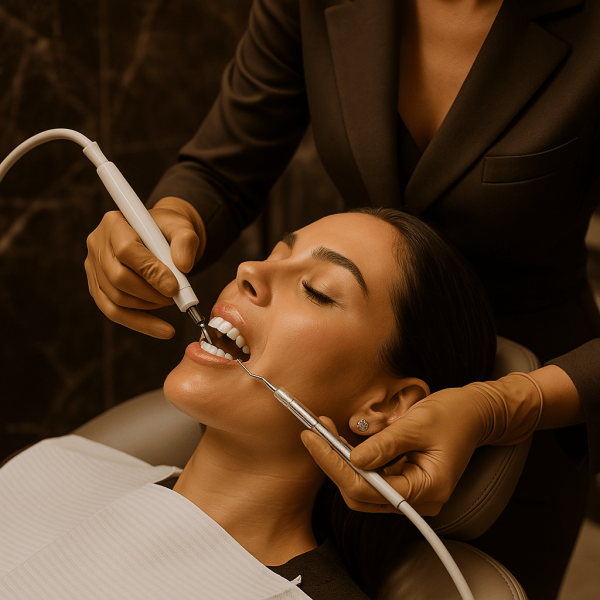
This is the most classic case. Cold, heat, sometimes even air trigger a quick, lightning-like pain. This phenomenon is due to the exposure of the dentin, a layer located beneath the enamel, which is much more sensitive to external variations. This type of reaction is often the first visible sign.
When a tooth is excessively damaged, extraction may be considered. However, it is never the first solution contemplated.
Replacing a tooth often involves implant placement followed by bridgework or a removable prosthesis.
These solutions are effective but require additional treatments.
The conservative treatment in endodontics can, in many cases, avoid these interventions.
There is not just one cause, but several possible mechanisms. This is precisely what makes diagnosis important.

In some cases, sensitivity arises not from the surface… but from the inside of the tooth. The pulp, which contains the nerves, may be compromised following deep decay, a crack, or bacterial infiltration.
The pain then becomes different: more intense, sometimes spontaneous.
In this context, an endodontic treatment may be necessary to address the underlying cause.
This is the most frequent situation. When the enamel thins or disappears, the dentin becomes exposed. And the tooth becomes more reactive.
Several factors can explain this wear:
This is often progressive… and therefore easy to underestimate.
Not all sensitivities require extensive treatment. But certain signs should make a distinction.
One does not treat a sensitivity without understanding its origin. At the Dental Office of Madeleine, the examination relies on several elements. First, clinical observation, then sensitivity tests and an X-ray if necessary. The aim is to identify the exact cause.
In some cases, a simple correction suffices. In others, a conservative treatment in endodontics helps preserve the tooth.
A classic sensitivity is brief. It disappears quickly and is triggered by a stimulus.
True tooth pain lasts longer. It can appear without reason and may even wake you up at night.
This distinction is very important. It helps guide the diagnosis.
Care always depends on the cause. There is no one-size-fits-all solution.
Depending on the situation, several options may be proposed:
When the pulp is affected, endodontic treatment eliminates the source of the pain. The goal remains the same: to treat without compromising the tooth.
Often, everything hinges on daily gestures. A few adjustments are enough to limit dental sensitivity, such as using a soft brush, avoiding overly aggressive actions, and adjusting your diet.
And above all… do not wait.
Regular follow-ups allow for early intervention before the situation worsens.
At the Cabinet Dentaire de la Madeleine, this follow-up is an integral part of the care process.
It’s common, but not trivial. It always deserves evaluation.
Yes, but heat or even air can also cause a reaction.
As soon as sensitivity becomes regular or more intense.
It can help, but does not treat the cause.
Sometimes. However, it can also evolve if not addressed.
No, only if the damage is deep.