

At the Madeleine Dental Practice, we do everything possible to preserve the integrity of your teeth and offer you a healthy, lasting smile. Dental cavities are common, but prompt treatment can prevent more serious issues. Our team employs advanced techniques for minimally invasive, effective, and personalized care.
A dental cavity is an infection caused by bacteria that convert sugars into acid. The acid attacks the enamel, the outer protective layer of the tooth, and then the dentin. Without treatment, the cavity can progress to the dental pulp, the center of the tooth, causing pain, infections, and potentially leading to tooth loss.
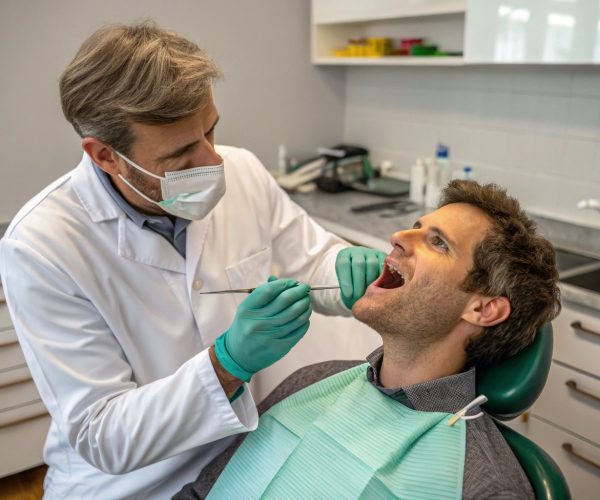
At the Madeleine Dental Practice, we always prioritize the least invasive solutions to preserve as much of your tooth’s natural structure as possible.
During your initial consultation, our dentists conduct a pratical examination complemented by X-rays. This allows us to determine the extent of the cavity and propose a treatment plan that best suits your situation.

The type of treatment will depend on the depth and extent of the cavity.
This treatment is applied to a cavity that has only damaged the enamel and dentin, without reaching the pulp. We remove the decayed portion of the tooth and restore it with aesthetic and durable materials that perfectly blend with the color of your natural teeth.
When the cavity is more advanced and has reached the pulp of the tooth, it is necessary to perform a root canal. This procedure allows us to remove the infected pulp tissue to prevent severe infection risks, intense pain (toothache), and necrosis. After the root canal, the tooth may be weakened. To protect it and restore its full function, we may recommend placing a dental crown, a robust and aesthetic solution.
In cases where the cavity is too advanced and the tooth can no longer be saved, extraction may be the only solution to preserve your oral health. Our dentists will then advise you on the best replacement options, such as dental implants, to restore the aesthetics and function of your smile.
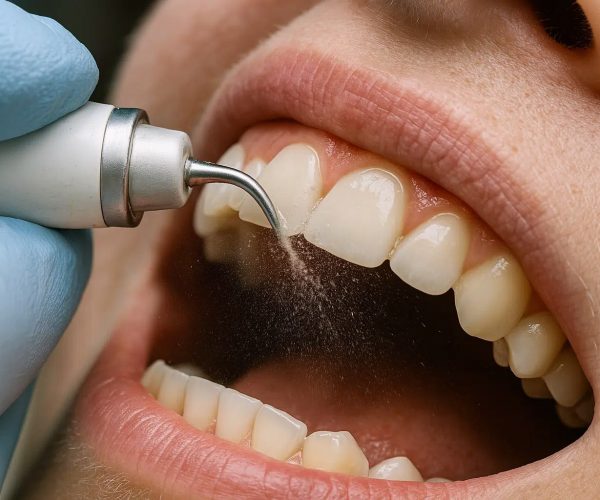
The best way to fight cavities is to prevent them. At the Madeleine Dental Practice, we guide you with personalized advice to maintain good oral hygiene:
Cavity treatments are generally painless.
A simple cavity treatment generally lasts about 30 minutes, depending on its size and complexity.
After a treatment, it is recommended to avoid eating while the anesthesia is still effective. Follow your dentist’s advice regarding oral hygiene and any temporary dietary restrictions.
Yes, a new cavity can form on the same tooth or another if oral hygiene is not maintained and risk factors persist. This is why prevention and regular check-ups are highly recommended.